INTEL-MAR

⚡From diagnostics to resilience: the coastal challenge

#Climate change #Structural diagnostics #Artificial intelligence #Digital twins #Structural health monitoring #Fluid-structure interaction #Maritime structure #Preventive maintenance #Hydrodynamic and structural modelling
Project visual or hero image
Grant ID
PID2024-161211OA-I00
Coordinator
University of Granada
Budget
€152.5k

INTEL-MAR: INTELligent preventive diagnostics for climate-resilient civil structures in coastal-MARitime environment

📌 Challenge

Structural Health Monitoring (SHM) research has mainly targeted onshore structures, while offshore and marine infrastructures remain underexplored. Harsh environments hinder sensor installation, data transmission, and damage detection due to complex wave- and soil-structure interactions. Existing studies largely focus on offshore platforms and wind turbines, with little attention to coastal protection (breakwaters, groins) and transportation infrastructures (bridges).

🧩Gaps in existing knowledge

🔍The absence of a detailed inventory for coastal-maritime structures limits risk assessment, planning, and management.

🔍Research on the effects of ECCs on the structural response of coastal-maritime structures remains limited.

🔍There is a lack of open monitoring databases on the structural response and environmental conditions of coastal-maritime structures for AI-based damage identification.

🔍Few efforts have targeted metamodeling high-fidelity hydrodynamic-structural models as digital twins for physics-based damage identification in coastal-maritime structures.

🔍Labeled damage databases are scarce and absent for coastal structures, while transfer learning from scaled laboratory models offers untapped potential for advancing SHM in real-world applications.

❓Starting hypotheses

🌟 Statistical pattern recognition algorithms used in SHM for onshore structures can be adapted for damage detection of coastal-maritime structures by incorporating specific climatic and environment factors such as water levels, wave pressures, and current velocities.

🌟 Advanced hydrodynamic-structural numerical models, coupled with AI-driven surrogate models, can be leveraged to create physics-driven DTs for quasi real-time damage identification.

🌟 Domain adaptation techniques can transfer knowledge acquired from scaled-down models tested in a laboratory wave-current flume to real-world structures, overcoming the challenge of limited damage data in actual coastal-maritime infrastructures.

Objectives

🎯 O1

Development of a risk classifier for civil structures, tailored to the Spanish maritime-coastal regions, based on qualitative criteria and climate prediction models.

🎯 O2

Experimental testing and damage diagnosis of scaled-down models in a wave-current flume, considering wave-current interactions and scouring effects. Specifically, two types of coastal structures will be tested: a breakwater and a bridge pier.

🎯 O3

Advanced hydrodynamic-structural models to simulate fluid-structure-seabed (FSS) interactions under current and projected climate conditions.

🎯 O4

Development of physics-based DTs trained using the FSS models developed in SO3, for quasi real-time health assessment of monitored coastal-maritime structures.

🎯 O5

Application of the proposed methodology to two real-world structures, and evaluation of the potential of TL to transfer the knowledge gained from the laboratory tests for improved damage identification.

Research & Work Packages

🗃️WP0 — Project Coordination, Management, and Dissemination

📝Task 0.1. Project management and coordination.

📝Task 0.2. Results dissemination and knowledge transfer.

🗃️WP1 — Qualitative risk assessment of coastal-maritime structures under climate change

📝Task 1.1. Survey of civil structures in the Spanish coastal regions.

📝Task 1.2. Data collection and preparation.

📝Task 1.3. ML model for qualitative risk assessment.

🗃️WP2 — Laboratory study of fluid-structure-seabed interactions and damage simulation in scaled-down models

📝Task 2.1. Experimental setup design.

📝Task 2.2. 2D Laboratory tests in the wave-current flume.

📝Task 2.3. Experimental data post-processing.

🗃️WP3 — Hydrodynamic and structural modelling

📝Task 3.1. Hydrodynamic modelling.

📝Task 3.2. Hydrodynamic-structural modelling.

🗃️WP4 — Data-driven and model-driven damage identification

📝Task 4.1. Data-driven damage identification: novelty analysis.

📝Task 4.2. Model-driven damage identification: digital twinning.

🗃️WP5 — Implementation on real-world structures

📝Task 5.1. Data collection.

📝Task 5.2. Damage identification through Transfer Learning and Digital Twins.

🗃️WP6 — Training

📝Task 6.1. PDPR towards the achievement of transversal competences/skills.

📝Task 6.2. PDPR towards the achievement of specific competences/skills.


Team

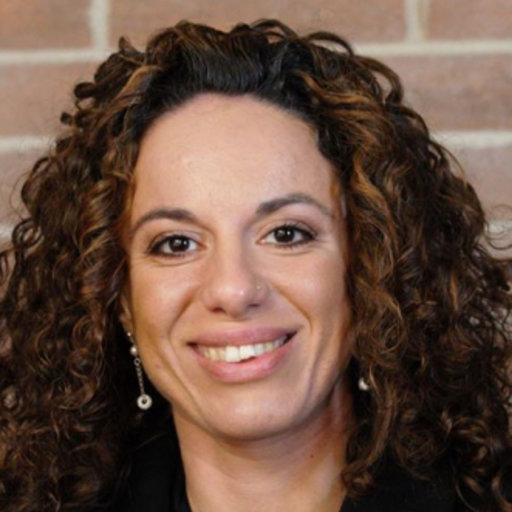
Dr. Enrique García-Macías

Dr. Enrique García-Macías

PI1 — Associate Professor

Department of Mechanics of Structures and Hydraulic Engineering
University of Granada

Dr. Pilar Díaz Carrasco

Dr. Pilar Díaz Carrasco

PI2 — Assistant Professor

Department of Construction Engineering and Engineering Projects
University of Seville

Dr. Enrique Manuel Padilla

Dr. Enrique Manuel Padilla

Research Team — Assistant Professor

Department of Engineering Graphics and Design
Universitat Politècnica de Catalunya

Dr. Alejandro E. Martínez-Castro

Dr. Alejandro Martínez-Castro

Research Team — Associate Prof.

Department of Mechanics of Structures and Hydraulic Engineering
University of Granada

Dr. Patricia Mares Nasarre

Dr. Patricia Mares Nasarre

Work Team — Assistant Professor

Civil Engineering and Geosciences
TU Delft

Dr. Enrico Tubaldi

Dr. Enrico Tubaldi

Work Team — Reader

Department of Civil and Environmental Engineering
University of Strathclyde

Dr. Laura Ierimonti

Dr. Laura Ierimonti

Work Team — Researcher

Department of Civil and Environmental Engineering
University of Perugia

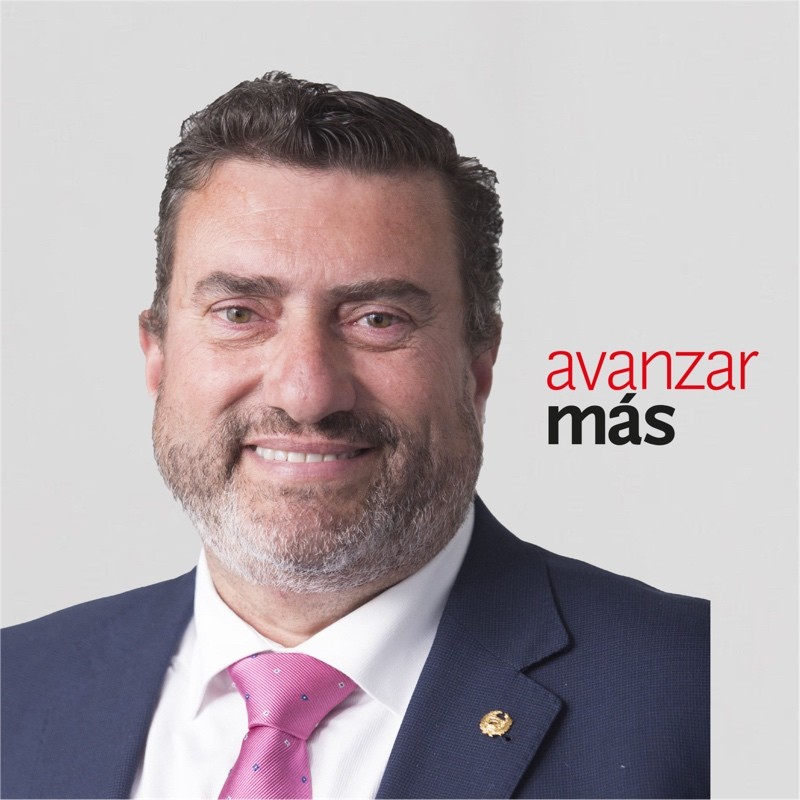
José Cuervo Campa

José Cuervo Campa

Work Team

Head of the Monitoring Section
OFITECO

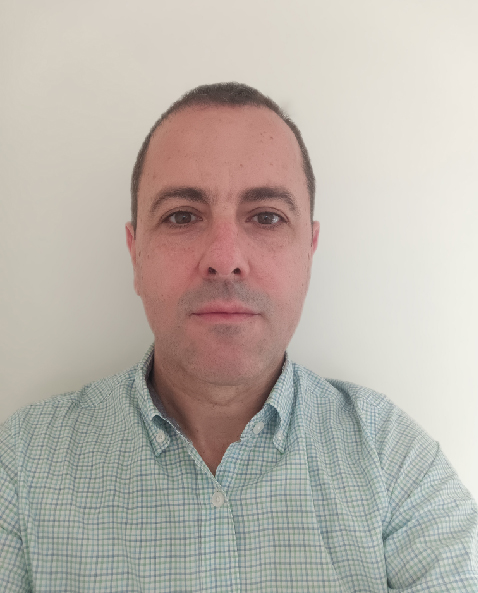
Patricio Poullet Brea

Patricio Poullet Brea

Work Team

Head of
Demarcación Costas Andalucía-Atlántico

Pedro Otiñar Morillas

Pedro Otiñar Morillas

Work Team — PhD student

Dept. of Mechanics of Structures and Hydraulic Eng.
University of Granada

Publications

Come one! We just started! 😜

News & Events

INTELMAR funded

Exciting News 🚀

📢 The Spanish Ministry of Science, Innovation and Universities has officially funded the INTELMAR project!. See more here.

Contact

For general enquiries, media, or collaboration proposals.
Send us a message

Follow us

Stay connected through our social channels.