Observe the
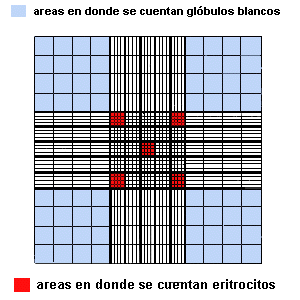
grid of the hemocytometer below. White blood cells are counted in
the areas coloured blue (4 corners). Consider the
following: One corner grid of 16 squares is 1mm x 1mm in area
and 0.10 mm deep. The dilution factor is 1:20. How would you convert
the number of white blood cells that are counted in the four corner
squares to the total number of white blood cells/µl? (N.B. 1 µl
(microliter) = 1 cubic mm )
|
 |
| The frame
below to the right mimics what you might see looking through the 10x
objective of the microscope. Only one blue corner of the
grid shown above is visible. Count the white cells in the
sixteen squares and determine the total white cell count. Note that
here you are counting in only one of the corners, and that normally
you would count in all four. Note also that a lot of debris is
present on the slide, due to the lysing of red cells to allow for a
proper white cell count. In a real laboratory session, one would
examine "uncertain" elements with higher magnification to confirm
that they are white cells. |
The expected range for
white cell count in both males and females is as follows:
Determine the white cell count for
the subject whose blood sample appears in the frame.
|
|
 Sangre
