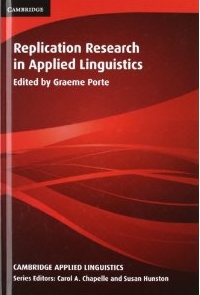
Senior Lecturer, Department of English and German, University of Granada
 Dr
Graeme Porte, Editor since 2002 of the Cambridge
University Press journal Language
Teaching,
is
senior lecturer in second language acquisition
at the University of Granada. His research work includes language
learning strategies, L1 attrition, and the
way
recent discoveries about human perception impact on SLA. His current
interests include replication research in applied linguistics. Graeme
Porte created, and manages, the "Journal Editors" forum,
which
currently includes the participation of editors from over 30
international applied linguistics journals. He is an invited member of the
Executive Editorial Board of Annual
Review of Applied Linguistics (CUP) and Studies in Second Language Acquisition (CUP). He is a senior
examiner for
the International Baccalaureate Diploma programme in English.
Dr
Graeme Porte, Editor since 2002 of the Cambridge
University Press journal Language
Teaching,
is
senior lecturer in second language acquisition
at the University of Granada. His research work includes language
learning strategies, L1 attrition, and the
way
recent discoveries about human perception impact on SLA. His current
interests include replication research in applied linguistics. Graeme
Porte created, and manages, the "Journal Editors" forum,
which
currently includes the participation of editors from over 30
international applied linguistics journals. He is an invited member of the
Executive Editorial Board of Annual
Review of Applied Linguistics (CUP) and Studies in Second Language Acquisition (CUP). He is a senior
examiner for
the International Baccalaureate Diploma programme in English.
2015-2016 session: Teaching Inglés Instrumental 5-6-7 - Groups M and T.
Tutorials: First Term: Mondays and Wednesdays 1030-1330.
Second Term: Mondays and Wednesdays 1230-1530. Office: F18, 2nd Floor, New Building, Facultad de Filosofía y Letras, Campus Cartuja. Telephone: 958 241000 (ext. 20238)
Editor
Language Teaching

2015 Impact factor 2; JCR Ranking 9/179 - Linguistics journals:
 Graeme
Porte has
been
the editor of Language
Teaching
since 2004 when it consolidated its
emergence as a unique research resource for the L2 researcher and
practitioner. This journal is indexed on
the Social Sciences/Arts and Humanities Citation Index. Specially
commissioned
articles survey
up-to-date research on specific topics, and new strands of articles
survey recent research on L2 learning and
teaching conducted in
individual
countries and research on the teaching of languages other than English.
Other new research survey strands include plenary and keynote speeches
from recent international events, annual reviews of the most
significant research to emerge, reviews of recent PhD work worldwide,
research agendas, and reports from research groups around the world.
Research timelines
by specialists in the field provide essential annotated bibliography on
the historical development
of research agendas, and a further new series is devoted exclusively to
the publication of replication research studies. http://journals.cambridge.org/lta-alerts
Graeme
Porte has
been
the editor of Language
Teaching
since 2004 when it consolidated its
emergence as a unique research resource for the L2 researcher and
practitioner. This journal is indexed on
the Social Sciences/Arts and Humanities Citation Index. Specially
commissioned
articles survey
up-to-date research on specific topics, and new strands of articles
survey recent research on L2 learning and
teaching conducted in
individual
countries and research on the teaching of languages other than English.
Other new research survey strands include plenary and keynote speeches
from recent international events, annual reviews of the most
significant research to emerge, reviews of recent PhD work worldwide,
research agendas, and reports from research groups around the world.
Research timelines
by specialists in the field provide essential annotated bibliography on
the historical development
of research agendas, and a further new series is devoted exclusively to
the publication of replication research studies. http://journals.cambridge.org/lta-alertsAppraising Research in Second Language Learning



With its second, expanded edition published in 2010, and currently recommended or core reading on over 80 applied linguistics and TEFL postgraduate courses worldwide, this combined text- and workbook is the first to provide specific advice and support to those wishing to learn how to approach the systematic critical reading and analysis of research in our field. It seeks to answer a current need in the literature for a set of procedures that can be applied to the independent reading of quantitative research.
“Porte’s book is a welcome addition to
Benjamins’s Language
Learning and Language Teaching series
which offers a wealth of beneficial information on L2 research
methodology.
This second edition of the book exhibits a closer integration between
the main
text and the workbook and is a well-thought-out text with many
remarkable
qualities. Readers who use this book will find it very useful and
informative.
Given the depth and breadth of topics discussed in this volume, it has
made a
solid contribution to appraising quantitative research in L2 learning.
The book
would be an excellent choice for any introductory graduate research
seminar and
could be used alone or to supplement other texts. This book should
appeal to
those interested in conducting their own research in the field of
applied
linguistics and SLA.” The
Modern Language Journal (Wiley)
“The
author has succeeded in providing anyone working in the field of
applied
linguistics and/or second language acquisition with tools for reading
and
understanding the elements of a research paper. What makes the book
especially
appealing is that in the discussion of each of the elements are clear
examples
and questions to help readers engage with the material. The exercises
and tasks
in the workbook, the key terms in the glossary section, and the charts
in the
appendices, such as a flowchart to be used before choosing the
appropriate
measurement test, further enrich the book.” Linguistic Society of America